
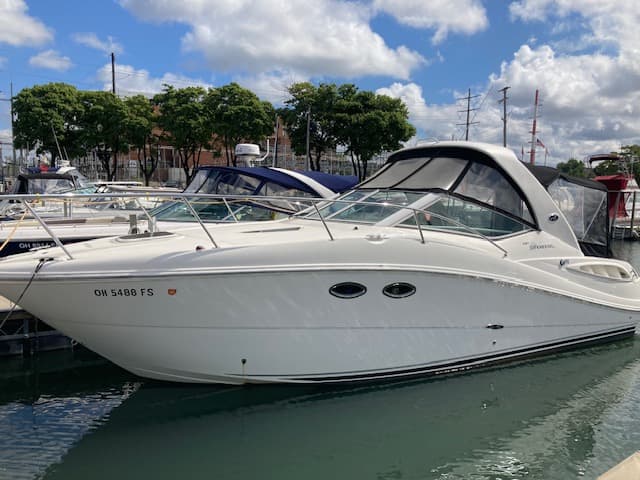
If you are searching for Cleveland boat dealers, the first thing worth sorting out is what kind of business you want on the other side of the table. Dealers, brokers, and private sellers all sell boats. They work in genuinely different ways, and the difference shows up in who represents you, how the person gets paid, and who handles the paperwork when something gets complicated.
Northern Boat Brokerage is a brokerage. Here is what that means in practice, and how to judge any of the three.
Dealer, broker, or private seller
A dealer owns the boats. They buy inventory or take trades, then sell at a margin. Many carry new-boat franchises alongside used stock, and the larger ones bundle service, financing, and storage in house. You are buying from them, and their interest is in moving the boats they own.
A broker represents the owner. The boat belongs to the seller the entire time. The broker markets it, handles the transaction, and is paid a commission when it sells. You are buying through them.
A private seller is the owner, with nobody in between. The price can be better. The paperwork, the payment, the lien if there is one, and the title transfer all land on the two of you to sort out.
None of those is automatically the right answer. What matters is which problems you want handled, and who has a duty to you when a decision has to be made.
What a brokerage actually does
The work that earns the commission is mostly unglamorous:
- Pricing the boat against comparable sales that actually closed, rather than against asking prices
- Marketing it to buyers who are looking for that kind of boat
- Qualifying buyers so a seller is not opening the boat up for tire-kickers
- Running the offer, counter, and acceptance
- Coordinating survey and sea trial with independent third parties
- Handling the purchase agreement, the payoff if there is a loan, and the title transfer
That last one is where most private sales get stuck. If there is a lien on the boat, someone has to verify the payoff with the lender, pay it, and get the title released and assigned before the buyer has clean ownership. Our guide to selling a boat with a lien walks through exactly how that runs.
Local knowledge is most of the value
Experience on this particular lake is worth more than experience in the abstract. Between us we have over 30 years of combined experience in the Cleveland market, and the things it teaches are specific.
Timing. Buyers should start looking between February and April to be ready for spring launch. Sellers should list before July 4th to have a real chance of closing before the season winds down in October. Waiting until Labor Day usually means storing the boat through winter and hoping for a spring sale.
Marinas. We have worked with clients at Lakeside Yacht Club, Edgewater Yacht Club, Edgewater Marina, Whiskey Island Marina, and Channel Park Marina, among others. Slip availability and length limits shape which boats are even practical for a given buyer, and the good slips fill before the season starts. The Cleveland marina guide covers the tradeoffs.
Freshwater condition. Boats that have lived their lives on Lake Erie hold up differently than the same hull run in salt, and knowing what to expect at survey is a large part of pricing one correctly.
What we do not do
We do not provide financing, surveys, or storage. We keep relationships with people who do, and we point clients to them.
That is deliberate. When one business sells you the boat, finances it, surveys it, and stores it, the incentives get tangled. A surveyor who depends on the seller for referrals has a quiet reason to go easy on the report. Keeping those functions with independent third parties means the person inspecting your boat has no stake in whether you buy it.
Who we tend to work with
Most of our clients are experienced boaters over 40 who have owned before and want the transaction handled properly. Common situations include needing to sell a current boat before upgrading, working out financing, or managing a sale during a family transition.
One client put it this way: "Clayton went above and beyond during a really difficult time and handled everything efficiently."
A charter company owner who has bought more than 30 boats said: "Clayton and his team were great and easy to deal with... communicative, transparent, and genuine."
Frequently asked questions
Is a broker or a dealer better for buying a used boat? It depends on what you want. A dealer sells boats they own and often bundles service and financing. A broker represents the seller and handles the transaction and paperwork. For a specific used boat on Lake Erie, a broker usually has access to a wider range of privately owned boats.
Who pays the broker? The seller pays a commission out of the sale proceeds. Buyers do not pay us separately.
Can a broker help me sell if I still owe money on the boat? Yes. That is routine. The loan gets paid out of the sale proceeds and the lender releases the lien so the title can transfer.
Do I need a survey? On most used boats, yes, and it should be an independent surveyor with no relationship to whoever is selling the boat.
When should I list my boat in Cleveland? Before July 4th if you want to close during the season. Buyers start shopping in February.
Talk it through
If you are weighing a specific boat, or trying to work out what yours is worth, that is a short conversation and we will give you a straight answer.
See how we work with sellers on the full-service brokerage page, with buyers on the boat buyer service page, or browse the current listings. You can also call (216) 780-5988.