The most useful question for a Lake Erie buyer is which size class to be in.
Length determines almost everything that matters on Erie: how far offshore you can run safely, which marinas have a slip for you, what your insurance costs, and whether you can keep the boat on a trailer at home. Get the size right and the rest of the decision gets easier.
This guide breaks the Lake Erie market into 4 size tiers and explains what each one actually lets you do. The framing is local. Erie is shallow on the western basin, deep and exposed in the central basin, and the weather windows are short. Size choice has to respect that.
Lake Erie has its own rules
A 22 ft boat that handles fine on a Florida bay can be the wrong boat 5 miles out of Cleveland on a Tuesday afternoon when a system moves in.
Erie is the shallowest Great Lake, which means waves build fast and stack close together. A short, steep chop is harder on a boat (and the people in it) than long ocean swells. Boats that feel big on inland lakes feel small here.
Two practical numbers to keep in mind:
- 3 ft chop is common on a normal summer afternoon when wind is over 15 knots
- 5 ft+ seas are realistic in spring and fall, and during summer fronts
The size tiers below assume you want to actually use the boat in those conditions, not stay tied up.
Under 22 ft: close to shore, calm days only
Boats under 22 ft are right for a buyer who plans to stay within a few miles of the breakwall, run on calm mornings, and trailer the boat home at the end of the day.
Bowriders, small center consoles, and runabouts in this range are inexpensive to insure, easy to store at home, and launchable from public ramps in Cleveland, Lorain, Sandusky, and Port Clinton. They also keep you mobile. You are not locked into a single marina for the season.
What you give up: weather window. A 19 ft runabout in 3 ft chop is a rough ride and a long one home. You will end up canceling plans more often than buyers in the next tier up, especially in May and September when the lake is at its most useful for cruising the islands.
This size makes sense for first-time buyers, families with young kids who mostly want to swim and tube, and anyone whose use case is "a few hours, a few miles out, then home."
22 to 28 ft: the workhorse range
This is the size range most Lake Erie buyers should be in, and it is where Northern Boat Brokerage sees the highest volume of qualified buyers.
A 24 to 26 ft bowrider, deck boat, or cuddy can handle a Tuesday afternoon Put-in-Bay run, manage 3 ft chop on the way home, and still trailer behind a half-ton truck if you want to. A 28 ft express cruiser opens up overnighting at the islands without committing to the cost and slip footprint of a true cabin boat.
Insurance is reasonable. Slip availability in Cleveland-area marinas (Edgewater, Whiskey Island, Cleveland Lakefront State Park, Mentor Harbor) is workable, though the best protected slips fill up early. Fuel burn is manageable. Resale on freshwater 22 to 28 ft boats holds up well because demand is broad.
Specific use cases this size handles well:
- Day trips to Put-in-Bay, Kelleys Island, Cedar Point shoreline
- Watersports with 4 to 6 people
- Light overnighting on a 27 to 28 ft cuddy or express
- Walleye and perch fishing if you set up a center console or walkaround in this range
The tradeoff: you are still weather-limited for the central basin and Canadian crossings. A 26 ft is doable to Pelee or Leamington on a settled summer day, but you will not run that crossing casually.
28 to 35 ft: overnight cruising and the islands
This is where the boat starts to define the lifestyle, instead of the other way around.
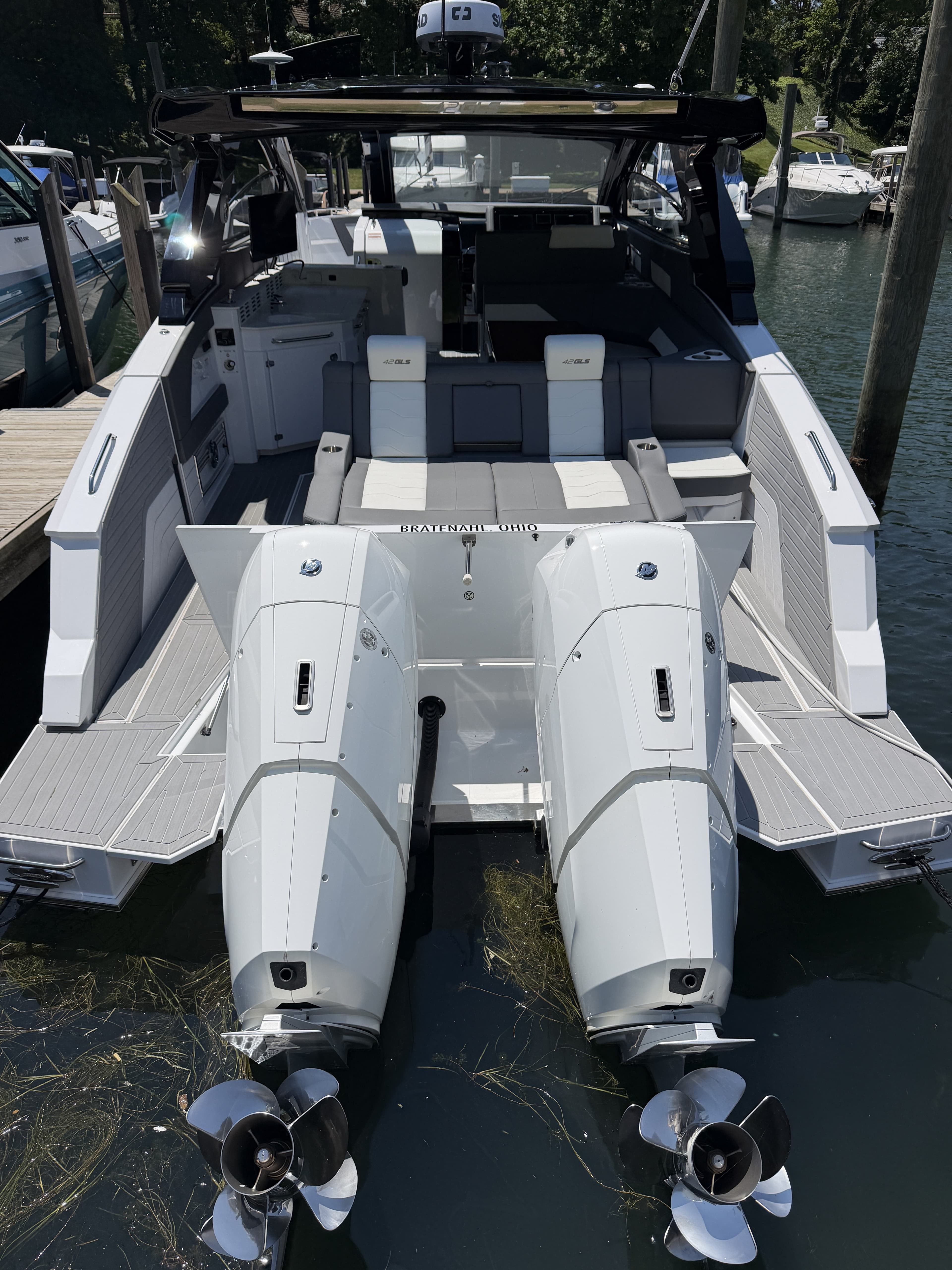
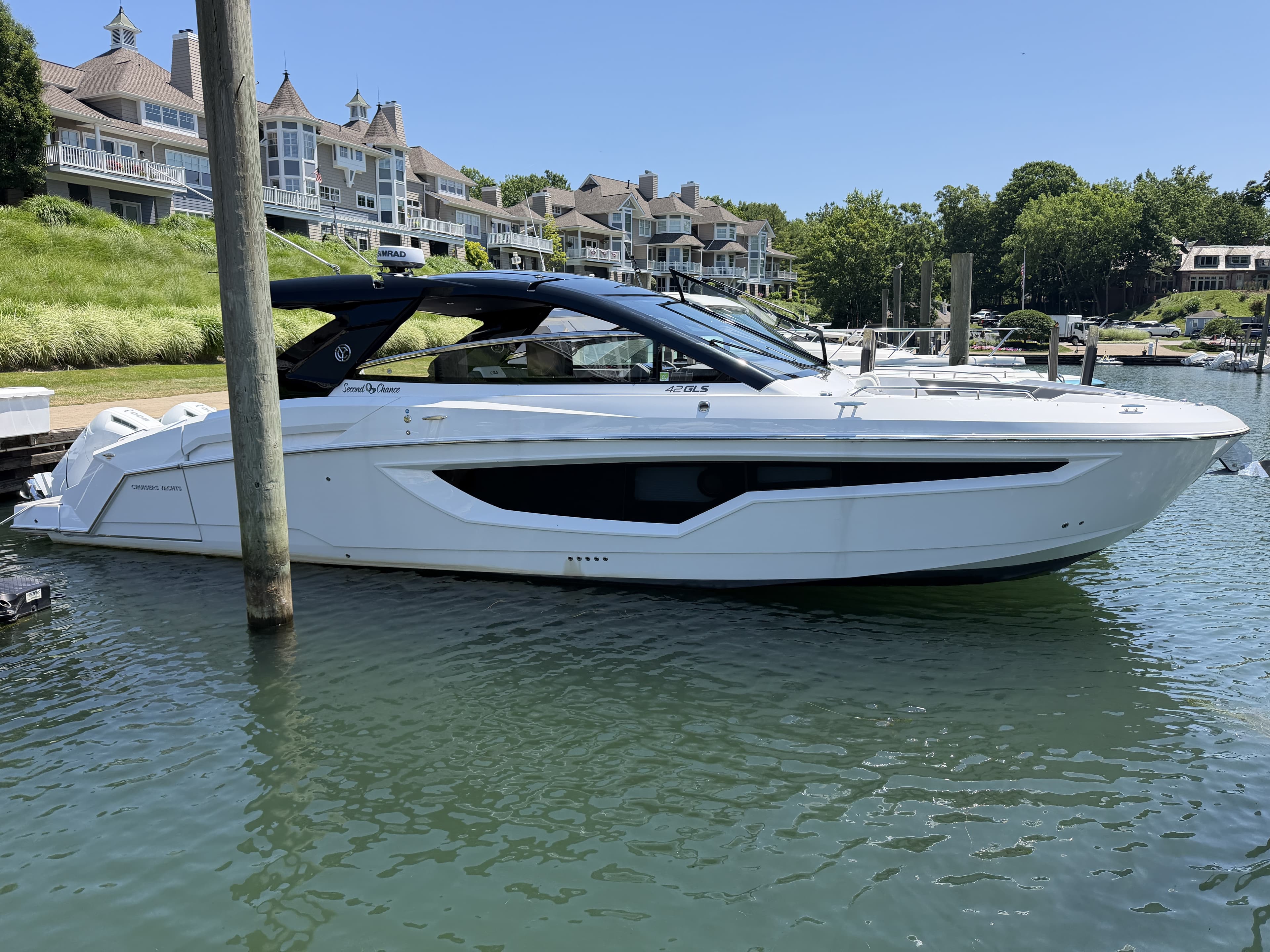
A 30 to 35 ft express cruiser or sport yacht has real cabin accommodations: enclosed head, sleeping for 2 to 4 adults, a galley you can actually use. You can leave Cleveland Friday afternoon, sleep at Put-in-Bay or Middle Bass, run to Kelleys or Pelee on Saturday, and come home Sunday. The boat handles 3 to 4 ft seas comfortably and keeps the trip enjoyable in conditions that would shut down smaller boats.
This is also the size range that starts to demand a permanent slip. Trailering a 32 ft cruiser is technically possible and practically a hassle. Most buyers in this tier commit to a slip for the season.
A few things to know before buying in this range:
- Slip length matters more than boat length. A 33 ft boat with swim platform and pulpit can need a 36 to 38 ft slip. Cleveland marinas measure overall length, including hardware.
- Twin engines become standard at 32 ft and up. They cost more to maintain and insure but you get redundancy and better docking.
- Survey costs go up. Expect $20 to $25 per foot for a serious pre-purchase survey on a cruiser this size.
Models that show up in this range on Lake Erie: Sea Ray Sundancer 320 to 350, Formula 31 PC and 34 PC, Cruisers Yachts Express 3375, Tiara 31 Open, Regal 30 Express. Most are freshwater-only on Erie, which helps resale.
A center console worth knowing about
Center consoles in the 30 ft range are rare on Lake Erie. Most buyers in this size class default to express cruisers, which is a habit more than a deliberate choice.
Power Play Powerboats is one of the few builders making a serious 30 ft center console that fits the way Erie actually gets used. The Rum Runner 30 is set up for cruising and day use, with comfortable seating, a full flushing head with 6 ft of standing headroom inside the console, and a hull built for rougher water. The Walkers Cay 30 is the same platform configured for serious fishing. Both are 29.6 ft overall.
The build quality is genuinely high. Aluminum T-top with canvas, full-width swim platform with dual ladders, 6 ft of below-deck storage, flush-mounted electronics, and the kind of details (gas shock compartment lifts, integrated layouts) that hold up over a decade of use. They are not common on Lake Erie, which means most buyers never see one. They should. For a buyer who wants the open-air fishability and weather-flexibility of a center console without giving up the cabin amenities of a 30 ft cruiser, this is the platform we recommend looking at.
35 ft and up: long weekends, Canada, real cruising
A 36 to 45 ft motor yacht or sport yacht is what you want if your plan is to cross the lake regularly, take 4 to 7 day trips, or use the boat as a weekend home for the season.
At this size you get full standup headroom, a real galley, separate sleeping cabins, and a hull that handles 5 ft seas without being a survival exercise. You can run Cleveland to Port Stanley or Erieau on the Canadian side as a regular trip, not a once-a-summer expedition.
What it costs you:
- Slip availability is tight. Cleveland-area slips over 40 ft are limited and waitlisted at the best marinas. Confirm a slip before you buy the boat.
- Annual operating budget runs $15K to $30K+ depending on the boat, including slip, insurance, maintenance, and fuel for typical use.
- Survey, insurance, and financing all get more involved. Expect a 2 to 3 day survey and sea trial process for a 40 ft+ boat.
Models in this range on Lake Erie include Sea Ray Sundancer 400 to 510, Formula 37 PC and 41 PC, Cruisers Yachts 4170, Carver 36 to 41, and the larger Sea Ray 480 / 500 Sundancers we see resold on the lake. Freshwater pedigree on these boats is a real resale advantage when you eventually move on.
For buyers who want a center console at this size, the Power Play Salacia 36 is worth a look. It is the same build philosophy as the 30 ft platforms scaled up, and at 36 ft it has the range and weather tolerance to make Canadian crossings comfortable. Center consoles this size are uncommon on Erie, which is part of why we recommend them.
Cleveland slip availability shapes the decision
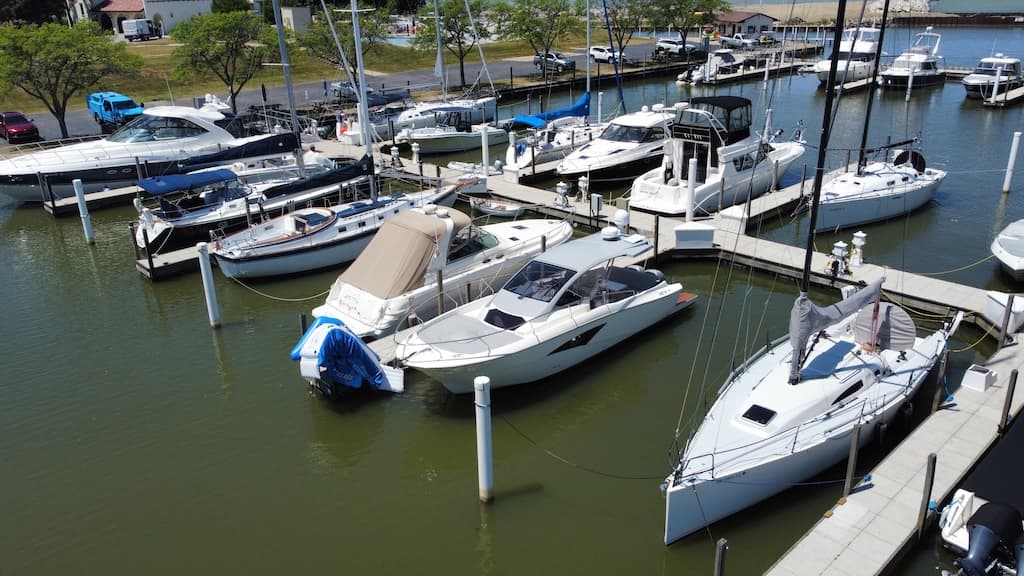
A real-world constraint for any Cleveland-area buyer: slip width and length are not infinite, and the best marinas fill up before the season starts.
Before you commit to a boat, call the marinas you would actually want to use and ask 2 questions:
- Do you have a slip for a boat with overall length of [X] feet, including swim platform and pulpit?
- What is the seasonal cost?
If the answers are "no" or "$15K," that affects the boat decision. We have seen buyers fall in love with a 38 ft cruiser, then discover their preferred marina only has 36 ft slips available. The right move is to confirm dockage first.
If you are not sure which marina fits your use case, the Cleveland marina guide covers the main options and their tradeoffs.
The honest broker take
The mistake we see most often on Lake Erie is buyers reaching for too much boat too early. A 35 ft cruiser sounds exciting on a showroom floor in February. In August, when you have used it 6 times because the weather, the slip logistics, and the cost have all worn you down, it stops being fun.
The buyers who get the most out of Lake Erie boating are usually in the 22 to 32 ft range. The boats in this tier get used. They get used because they are cheap enough to run casually, small enough to single-hand, and big enough to handle the lake on a normal day.
If you are between two sizes, the right answer is usually the smaller one. You can always trade up after a season of real use. Trading down because you bought too much boat is a more painful exercise.
FAQ
What is the smallest boat that is safe for Lake Erie?
A well-built 18 to 20 ft boat is safe for Lake Erie within a few miles of shore on calm to moderate days. The real constraint is your weather window. Smaller boats get shut down more often, especially in spring and fall.
Can you trailer a 30 ft boat in Cleveland?
Technically yes, with a heavy-duty truck and the right trailer. Practically, most boats over 28 ft live in a slip for the season. The fuel, ramp logistics, and storage at home make trailering a 30 ft boat a hassle that most owners avoid.
What size boat do you need to cross to Canada?
Most experienced Erie boaters consider 26 to 28 ft a reasonable minimum for casual Canadian crossings on settled days. For regular crossings to Pelee, Leamington, Port Stanley, or Erieau, a 32 ft+ boat with twin engines is more comfortable and more weather-tolerant.
How much does it cost to keep a 30 ft boat in Cleveland?
A reasonable budget is $10K to $15K per year, including slip, insurance, winter storage, and routine maintenance, before fuel. A 35 to 40 ft boat doubles that range. Costs vary by marina and how much maintenance you do yourself.
Should I buy bigger and grow into it, or start smaller?
Start smaller. Buyers who size up after a real season of use know what they actually want, what they actually used, and what they wish they had. Buyers who buy big first usually end up selling a year or two in.
Picking the right size
The right size boat for Lake Erie is the one that fits how you will actually use it, not how you imagine using it. Be honest about your weather tolerance, your time, your budget, and your slip options. Buy at the size where the boat will get used.
If you want help thinking through your specific use case, what is realistic in your budget, and which boats are currently available on Lake Erie at the right size, that is what we do at Northern Boat Brokerage. Reach out and we will give you a straight answer.