
The work happens in October. The decisions happen in August. Every year a set of Cleveland-area boat owners calls around in the second week of October, finds the indoor buildings full and the good yards booked three weeks out, and ends up taking whatever is left.
This is the end-of-season sequence on Lake Erie: when each piece gets booked, what a real winterization covers, how the storage options actually differ, and how to read a quote.
The Lake Erie end-of-season calendar
Lake Erie is the shallowest of the Great Lakes, which makes it the first to freeze hard and the one that does the most freeze damage to boats left unprepared. The first hard freeze in Northeast Ohio usually lands in the second half of October. That date, not the end of the boating season, is the deadline that matters.
Working backward from it:
August. Call now, not later. This is when you get your name on an indoor list, lock a haul-out date, and get quotes while yards still have room to bid for your business. Nothing has to happen yet. The calendar just has to be claimed.
September. Indoor heated storage in this market is genuinely scarce, and the good buildings are spoken for by the end of the month. If indoor heated is what you want, September is the outside edge.
Early to mid October. Haul-out and winterization. Most Cleveland-area yards run their haul schedule through October, some into early November. This is also the last comfortable window to have work done while the boat is accessible and the yard is not underwater in backlog.
Late October. Shrink wrap goes on. Wrapping too early traps a warm, damp boat under plastic for a month, which is its own problem.
January and February. Book spring commissioning. This sounds absurdly early and it is exactly right. Yards fill their spring schedule over the winter, and owners who wait until April are launching in June.
Haul-out: what you are actually scheduling
Haul-out is a crane or travel-lift slot, and it is the piece with the least flexibility, because the yard can only pull so many boats a day and weather takes days off the calendar.
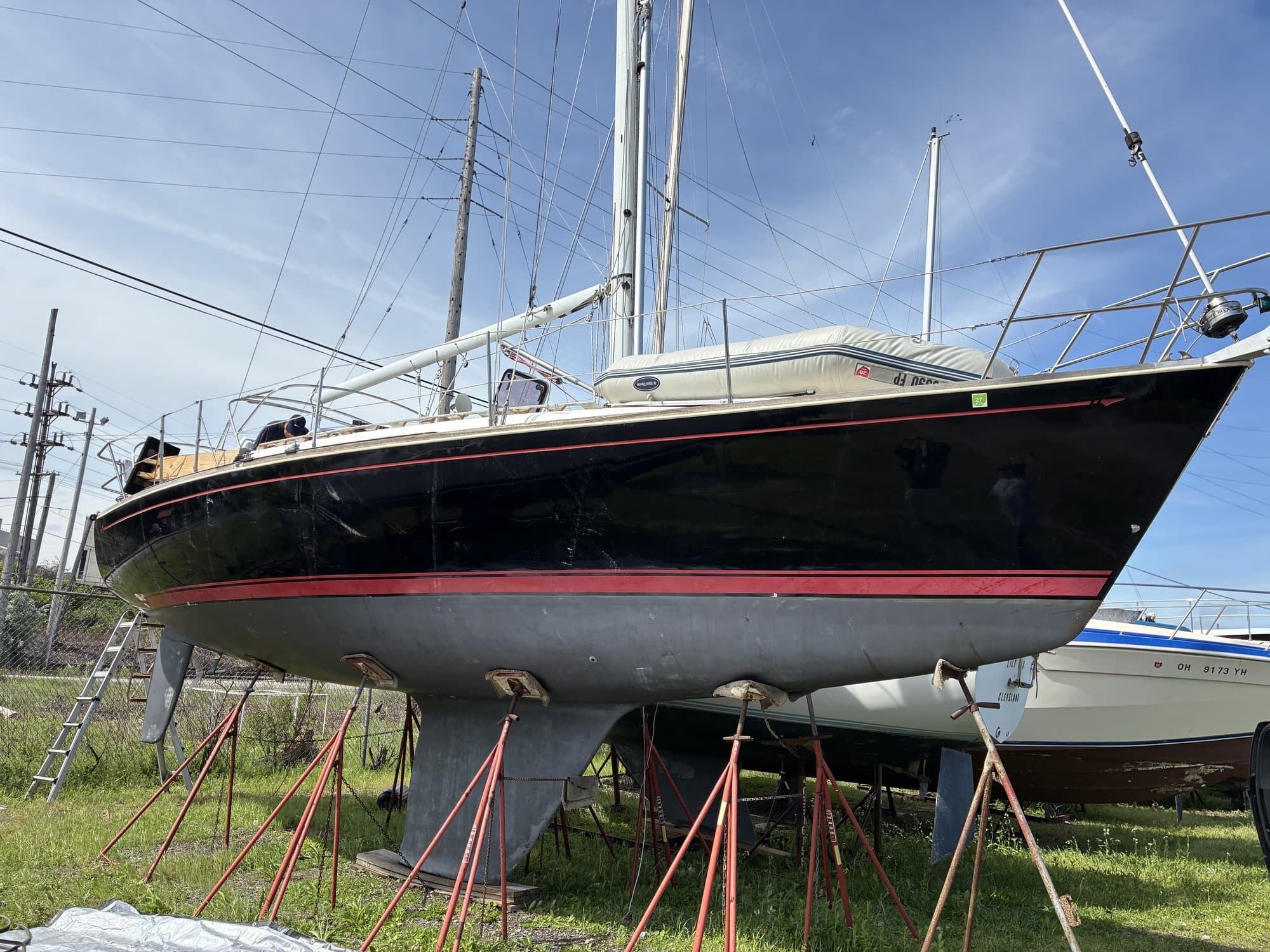
When you book, confirm three things: the date, whether pressure washing the bottom is included (it usually is, and it needs to happen before growth dries on), and who is responsible for blocking and jack stands. Blocking is not a detail. A hull carried on badly placed stands through a freeze-thaw winter can take a set, and that shows up later as a soft spot or a stress crack.
If your boat is on a trailer, most of this collapses into a simpler problem, and your constraint becomes where the trailer sits rather than who lifts the boat.
What a real winterization covers
The phrase means different things at different shops, which is why a flat-rate quote with no detail behind it is a warning sign. A Lake Erie winterization should include:
- Engine fogging and fuel stabilizer. Stabilizer goes in with enough running time to get treated fuel through the whole system.
- Complete raw water drain and flush. This is where nearly every freeze failure starts. Every water passage has to be clear, not mostly clear.
- Antifreeze in anything that cannot be fully drained. Raw water systems, heat exchangers, air conditioning, the head, and the freshwater plumbing all qualify depending on the boat.
- Oil and filter change. Used oil holds acids and moisture. Leaving it in all winter is how you etch bearing surfaces.
- Gear lube service on outdrives, with a look at the condition of what comes out. Milky lube means water intrusion and a seal problem you want to know about now.
- Batteries removed or on a maintainer. A discharged lead-acid battery will freeze and split.
- A mechanical look at everything while it is open, since this is the one time of year the boat is apart and accessible.
Inboard and sterndrive systems have more places to trap water than an outboard does. If a shop quotes the same flat number regardless of engine configuration, ask what they are actually doing.
Where boats crack
Understanding the failure helps you evaluate the work.
Water expands roughly 9% when it freezes. An engine block, a manifold, a heat exchanger, and a raw water pump housing are all rigid castings with water passages running through them. A pocket of trapped water in any of those becomes a wedge, and cast iron gives before ice does.
The damage almost never announces itself in winter. It shows up at spring launch, when the boat goes in the water and starts filling, or when the engine runs for 10 minutes and overheats. By then the boat is in the water and the yard's spring schedule is full.
The other common failure is quieter: moisture that never leaves. A boat sealed under plastic with no ventilation grows mold on every soft surface it has. That is a canvas, headliner, and upholstery bill, and it is entirely preventable.
Choosing where the boat spends the winter
Four real options in this market, roughly most to least protective:
Indoor heated. The best outcome for gelcoat, paint, brightwork, and anything you have money invested in cosmetically. It removes freeze-thaw cycling from the hull completely. It is the most expensive option and the most limited in supply, which is why the September deadline is real.
Indoor unheated, sometimes called dry storage. Keeps snow load, ice, and direct weather off the boat without holding temperature. This is the most common choice for cruisers and runabouts on this shoreline and it is a sound one for most boats.
Outdoor, shrink wrapped. Perfectly viable when the wrap is done correctly, and it is what most of the fleet does. The wrap has to be vented and it has to be supported well enough to shed snow instead of pooling it.
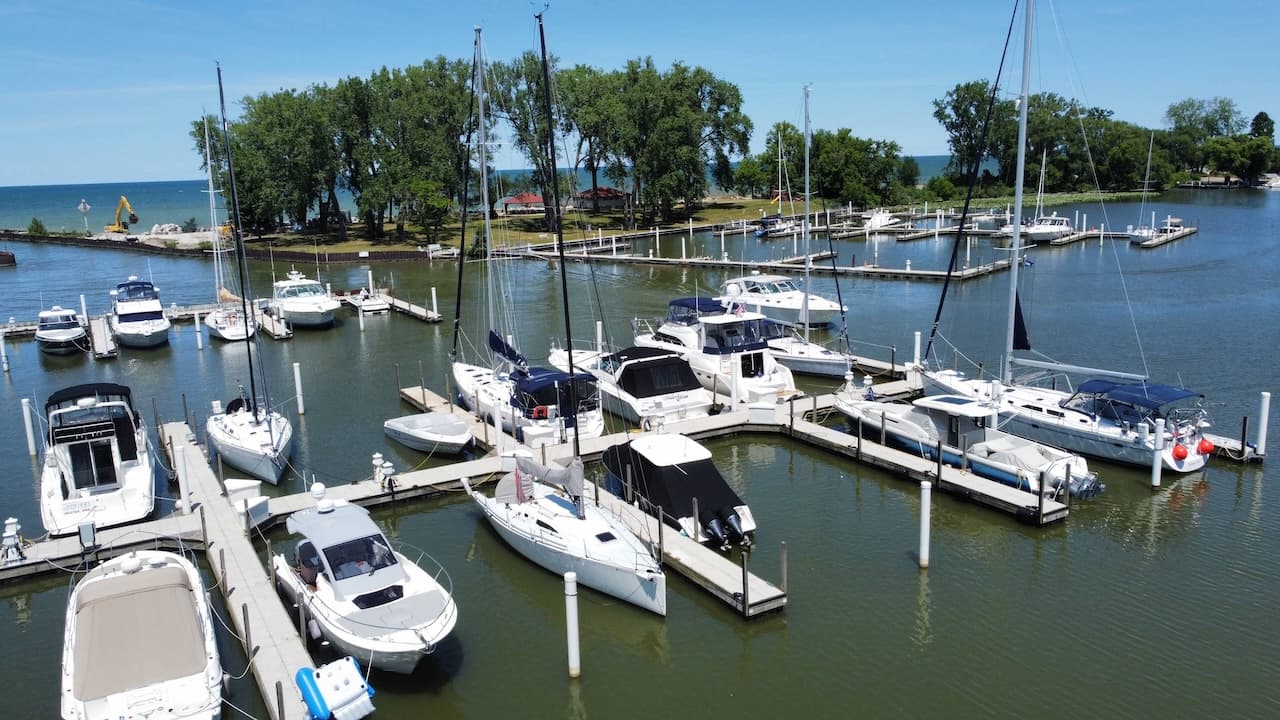
In the water. Some Cleveland-area boats stay in with bubblers or de-icers running. This is a real option at facilities set up for it and a bad idea at facilities that are not. It also means the hull never gets inspected, never gets bottom paint, and never gets a chance to dry out. Whether your marina supports it is worth confirming before you assume, and our Cleveland marina guide covers which facilities handle haul-out and storage on site versus sending you elsewhere.
The honest way to choose: match the storage to what the boat is worth and what condition you want it in next May. A 40-foot cruiser with fresh paint and an indoor-storage history is a different boat on the market than the same hull that sat outside under a tarp for six winters.
Shrink wrap, done right
Wrap is cheap relative to what it protects and it is the piece most often done badly.
What correct looks like: a frame that holds the plastic well above the deck so snow slides rather than sits, wrap that is heat-shrunk tight rather than draped, vents installed along the length of the boat, a zippered access door if you want to get aboard, and padding anywhere the frame or the film contacts a rubrail, a windshield, or a stanchion.
Ask how many vents they install and whether the price includes a door. Both answers vary more than they should.
Reading a winter storage quote
Storage is usually priced per foot of length, and the per-foot number is the first thing to get in writing. From there, the variables that move a quote:
- Length, and how they measure it. Some yards charge on registered LOA, some on overall length including the pulpit and the swim platform, which on a 34-foot boat can be a 4-foot difference.
- Heated versus unheated versus outdoor.
- What is bundled. Haul-out, pressure wash, blocking, winterization labor, wrap, launch in the spring, and the slip for next season are sometimes in the number and sometimes separate lines.
- Engine configuration, for the winterization portion.
- Whether the boat stays in the water during the work, which typically adds cost.
- Access. Some facilities charge to pull your boat out of a stack so you can get aboard in February.
Get the whole season quoted as one number with the line items visible, and ask specifically what the spring launch and commissioning will cost. That second number is where a cheap winter quote quietly becomes an expensive one.
Doing it yourself
Winterizing your own outboard is a reasonable Saturday for a mechanically comfortable owner. Fogging, stabilizer, lower unit lube, and a battery on a maintainer covers most of it.
Inboards and sterndrives are a different proposition, and the cost of getting one passage wrong is a block. If you do it yourself, work off the engine manufacturer's procedure for your specific model rather than a generic checklist, and account for every water passage on the boat rather than the obvious ones.
Shrink wrap is not a DIY job worth attempting. The equipment is a heat gun that starts fires on boats regularly, and a badly built frame collapses under the first heavy snow.
What winter storage does to resale value
This is the part we see from the brokerage side, and it is bigger than owners expect.
Two identical hulls, same year, same engines, same hours. One wintered indoors with documented annual winterization. The other sat outside under a tarp with no records. They do not sell for the same money, and they do not sell in the same amount of time. The second one attracts lower offers, more survey findings, and more buyers who walk.
Storage history is one of the few things about a used boat a buyer can verify, and buyers weight it accordingly. Keep the invoices. A folder of winterization receipts is worth more at sale time than most of the upgrades people spend money on, and it costs nothing to save.
If you are thinking about selling in the next year or two, that changes the storage math. Our guide to what your boat is worth in Cleveland covers how condition and documentation feed into pricing, and the used boat buying guide shows what buyers are actually inspecting.
Common questions
When should I book winter storage in the Cleveland area? August for indoor, September at the latest for indoor heated. Haul-out and winterization can generally be booked into September for October work, though the better yards fill earlier.
When does Lake Erie freeze? Ice usually forms in earnest from late December into January, and Erie freezes more completely than the other Great Lakes because it is shallow. The relevant date for your boat is the first hard freeze, which in Northeast Ohio typically arrives in the second half of October.
Can I skip winterization if the boat is stored indoors? No. Unheated indoor storage still goes below freezing, and even heated buildings lose power. Winterization protects the engine and plumbing; storage protects the hull and finish. They are separate jobs.
Is shrink wrap or a tarp better? Shrink wrap, by a wide margin, provided it is vented. A tarp flaps, chafes gelcoat all winter, holds water in pockets, and rarely stays put through a Lake Erie January.
What does bad winterization actually cost? A cracked engine block generally means a repower or a rebuild, which on a twin-engine cruiser runs well past what a decade of professional winterization would have cost. The cheaper failures, split hoses and a ruined raw water pump, still mean the boat misses the front of the season.
Do I need to winterize a boat on a trailer in a garage? Yes, unless the garage is heated and stays heated. An unheated attached garage in Northeast Ohio goes below freezing.
Getting a referral
We do not store, winterize, wrap, or service boats. What we do have is a shoreline's worth of experience watching which facilities do this work correctly and which ones produce boats with problems in the spring.
If you want to be pointed at facilities we trust, our storage and winterization referrals page covers the full Ohio shoreline, from Cleveland and Rocky River west through Lorain and Sandusky to Port Clinton, and east to Mentor. These are not paid partnerships. They are yards we have watched over multiple seasons.
Tell us where the boat is and what you are looking for, and we will point you in the right direction. Get in touch or call (216) 780-5988.
If the end of this season is also the end of your ownership, that is a conversation worth having now rather than in the spring. Boats listed in the fall face less competition than the wall of inventory that hits every April. Read more about listing a boat with us, or browse current listings to see what is moving.