
An Ohio boat title moves one of three ways after the owner dies: straight to a named beneficiary if the title carries a transfer-on-death designation, straight to a surviving spouse under a statute that covers one boat, or through probate. Which one applies decides whether you can sell the boat in a week or in six months.
What follows is how the process works, not legal advice. Estates get complicated quickly, and a probate attorney is worth an hour of billing if yours is anything but simple.
Where Ohio boat titles actually live
Ohio watercraft titles are issued by the County Clerk of Courts, not the BMV. People lose a morning at a deputy registrar office before they find this out. The forms carry BMV numbers, which adds to the confusion, but the counter you need is at the courthouse.
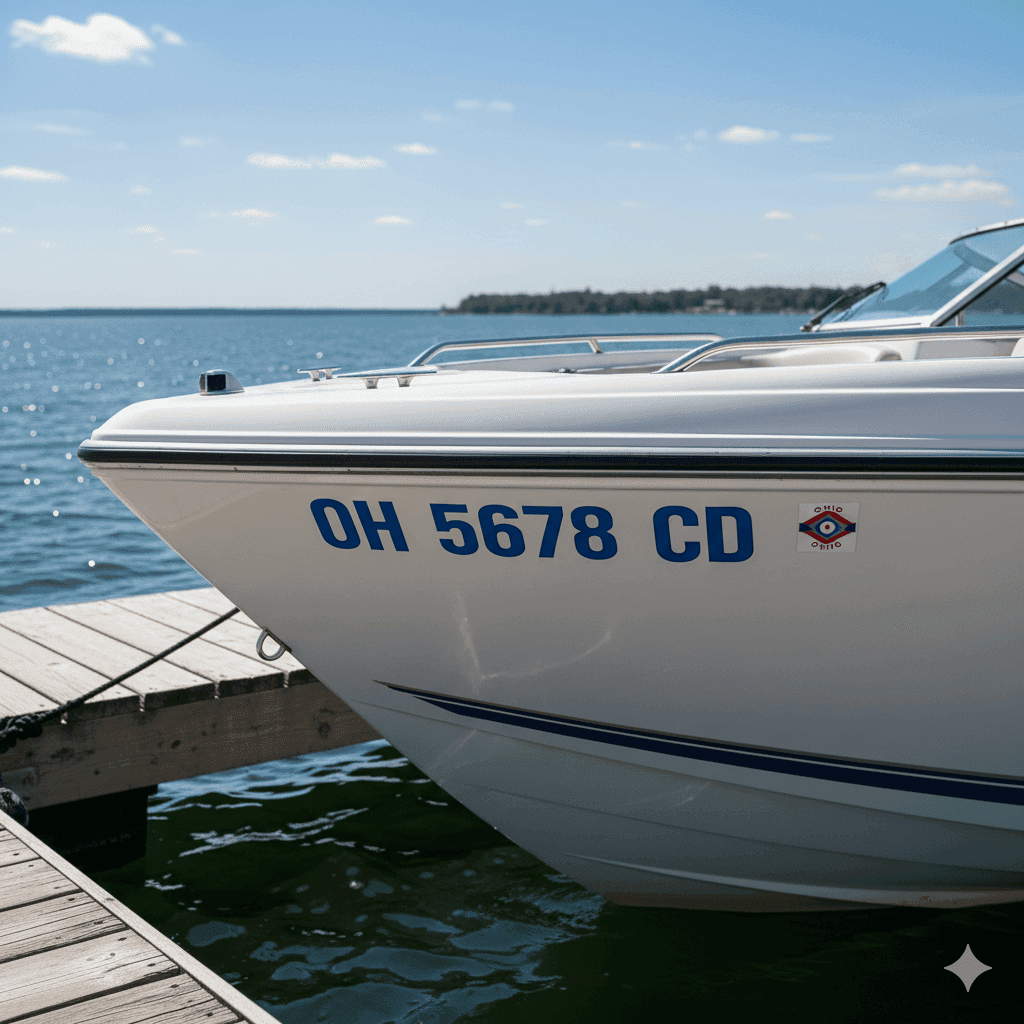
Boats 14 feet and longer and outboard motors of 10 HP and up are titled in Ohio, so nearly everything sitting in a Cleveland-area slip is in scope. Smaller craft and low-power outboards are registered but not titled, and they transfer with a bill of sale.
The three routes, quickest to slowest:
- A transfer-on-death beneficiary is already named on the title.
- There is a surviving spouse and no beneficiary named.
- Everything else, which means probate.
Route 1: the title already names a beneficiary
This is the fast one, and it is over in a single visit.
Under ORC 1548.11, the beneficiary brings the certificate of title and a certified copy of the death certificate to the Clerk of Courts, fills out an Application for Certificate of Title (form BMV 3774), shows a government photo ID, and pays the title fee. The clerk issues a new title in the beneficiary's name. No probate, no court date, no attorney.
The catch is that the designation has to exist before the death. It is created while the owner is alive with a notarized Affidavit to Designate a Beneficiary (form BMV 3811), filed at the Clerk of Courts along with the original title. Once it is on there, the beneficiary's name appears on the face of the title.
Route 2: a surviving spouse and no beneficiary named
ORC 2106.19 covers this. On the death of a married Ohio resident, the deceased spouse's interest in one watercraft, one watercraft trailer, and one outboard motor passes immediately to the surviving spouse. Those items skip probate entirely.
The Clerk of Courts will want the death certificate, a surviving spouse affidavit, and the original title with the assignment on the back completed, signed, and notarized.
The statute covers one boat. If your spouse owned two, the second one is an estate asset and goes through probate like anything else.
Route 3: probate
No beneficiary on the title, no surviving spouse, or it is the second boat. Now the boat is an estate asset and the court decides who can sign the title.
Ohio has two shortcuts before full administration:
Release from Administration is available when the estate's assets come to $35,000 or less, or $100,000 or less when a surviving spouse is the sole beneficiary. It is faster and considerably cheaper than full probate.
Summary Release from Administration handles the smallest estates, sometimes in a single visit.
Above those thresholds you are in full administration. The court appoints an executor or administrator, and that person signs the title on behalf of the estate once the appointment is in hand.
Timing is the part families underestimate. Full administration in Ohio commonly runs six months or longer before anyone can sign a title, and the boat keeps costing money the entire time.
If the boat is federally documented
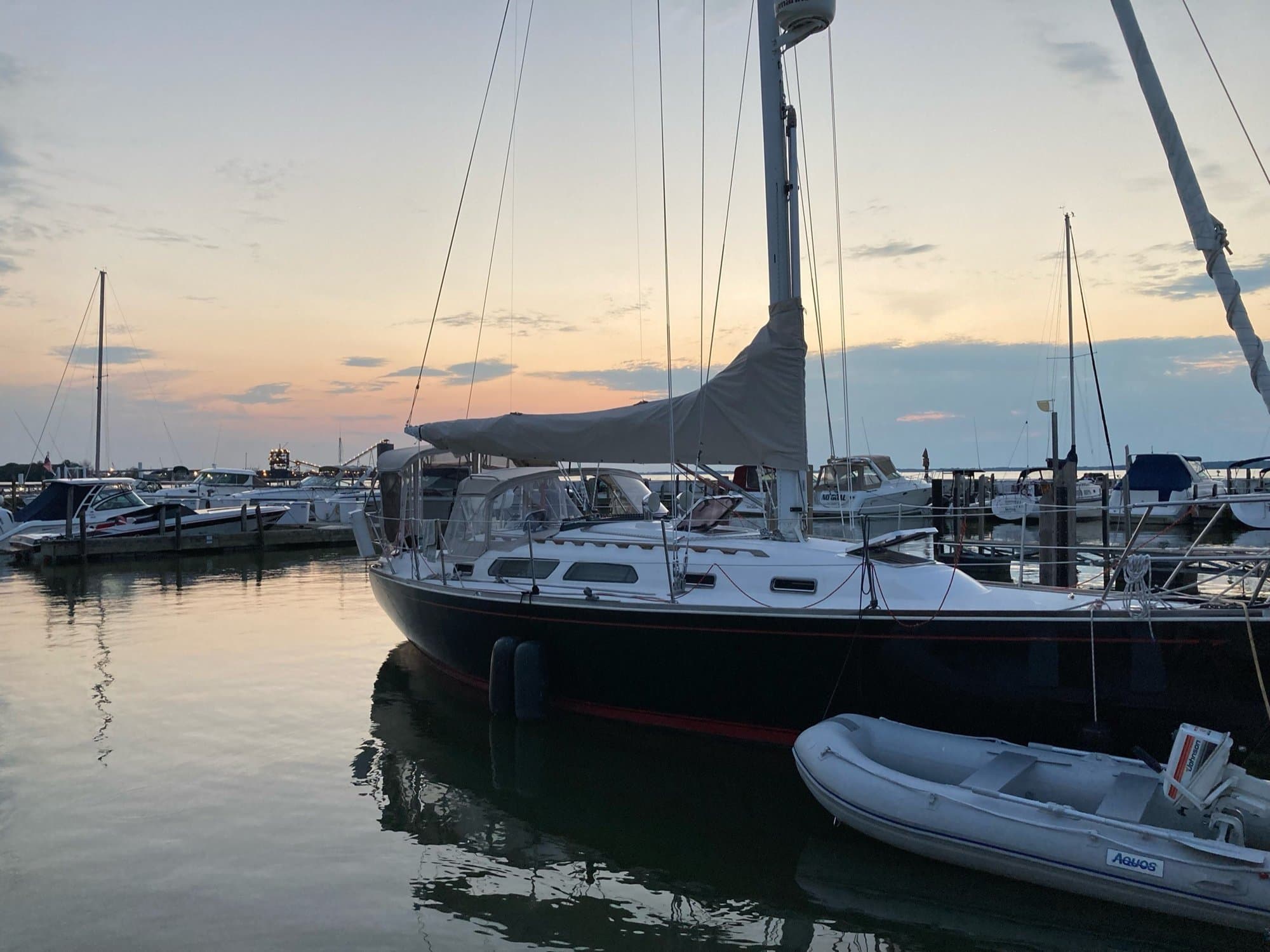
Larger boats, generally 5 net tons and up, which in practice means roughly 25 feet and above, are often documented with the Coast Guard instead of carrying a state title. Ohio does not issue a title for a documented vessel.
That transfer runs through the National Vessel Documentation Center rather than the Clerk of Courts, and the NVDC wants evidence of the transfer out of the estate. It is a slower mailbox than the county counter. A documented vessel still needs Ohio registration through ODNR to operate on Ohio waters, so a boat can be mid-transfer federally and still need its state paperwork current.
Our documentation versus registration guide covers which one your boat has and why.
If there is still a loan on the boat
The debt does not die with the owner. The lender's lien stays on the title, and no title moves anywhere until it is released.
Call the lender early. Get the payoff quote in writing, and ask specifically what they need to release a lien when the borrower has died, because the answer varies by institution and some of them are slow about it. Ohio's electronic lien and title program means some lenders release the lien electronically while others mark and mail a paper title.
The payoff can come from the estate or from the buyer's funds at closing. The mechanics are the same as any lien sale, which we walk through in the guide to selling a boat with a loan on it.
What the boat costs you while the paperwork runs
This is the part nobody warns families about, and it is usually what turns "we should probably keep it" into "we should sell it."
The slip keeps billing. Seasonal dockage on the Cleveland lakefront is real money and marinas generally do not refund it back. Winter storage and shrink wrap come due in the fall regardless of whose name is on the title. If the boat is on a trailer at a yard, that yard is charging too.
A boat that sits also gets worse. Batteries flatten, impellers and seals dry out, fuel goes stale, and bottom growth builds through the season. A boat that sat idle for one summer shows it in a survey, and the buyer prices that in.
Getting an inherited boat ready to sell
Most people in this position did not own the boat and do not know it. The gaps are what slow a sale down.
- Find the title. It is almost never on the boat. Check the file cabinet, the safe deposit box, and the folder with the car titles.
- Read the hull identification number off the transom, upper starboard corner, and check that it matches the title.
- Track down the registration and confirm the ODNR decal is current.
- Look for loan paperwork even if the family believes the boat was paid off.
- Photograph everything before anyone starts pulling personal items off, especially if there is more than one heir.
- Find the maintenance records. Receipts, yard invoices, engine service history. This is the single highest-value thing you can hand a buyer.
- Confirm where it is stored and what is owed there.
That last one catches people. A yard with an unpaid bill may have a lien of its own, and it will not release the boat until that is settled.
What an inherited boat is actually worth
Families usually arrive with a number already in mind, from what the boat cost new or from what the owner used to say it was worth. The market rarely agrees with either.
Estate boats also tend to sell under comparable hulls, for reasons that have nothing to do with the boat: it has been sitting, the maintenance history is scattered, and nobody left can answer a buyer's questions about how it ran. Every one of those is fixable before listing, and fixing them is worth more than a price cut.
Our guide on what your boat is worth in Cleveland covers how the comparables actually work on Lake Erie.
Designating a beneficiary before anyone needs it
If you own a boat in Ohio, this is a 20-minute errand that saves your family months.
Take your title to the County Clerk of Courts and file a notarized Affidavit to Designate a Beneficiary (BMV 3811). Sole owners can do it, and so can joint owners with right of survivorship, filing together. Under ORC 2131.13, the beneficiary gets no interest in the boat while you are alive, and you can change or cancel the designation at any time without asking them. The title stays yours in every practical sense.
Do the same for the trailer, which carries its own title.
Common questions
Do you have to go through probate to sell an inherited boat in Ohio? Only if there is no transfer-on-death beneficiary on the title and no surviving spouse taking it under ORC 2106.19. Either of those paths avoids probate for the boat.
Does a will override a transfer-on-death beneficiary named on the title? No. A transfer-on-death designation passes the boat outside the will, straight to the named beneficiary. If the will says something different, the title still controls.
How long does this take? A day at the Clerk of Courts on the beneficiary or surviving spouse routes. Release from Administration typically runs a few weeks. Full administration commonly takes six months or more before anyone has authority to sign.
Can you use the boat before the title transfers? Not safely, and usually not legally. Registration and insurance both sit in the deceased's name until the transfer happens, which is exactly the wrong combination to be out on the lake with.
What if the heirs disagree about selling? Then the estate needs the court or an attorney to sort it out first. A broker cannot list a boat that the people entitled to it have not agreed to sell.
What if the boat is titled in another state? The transfer follows the law of the state that issued the title, then the new owner titles and registers it wherever the boat will live. If that is Ohio, our title and registration help page covers the incoming side.
Selling an inherited boat on Lake Erie
Once the title is clear, the sale itself is an ordinary brokerage transaction, and the estate does not need to know anything about boats to get through it. We handle the title work, the lien payoff if there is one, and the buyer side, which is the whole reason people call rather than trying to sell it themselves. Our full-service brokerage page covers how the process runs, and the Cleveland boat broker guide covers what to ask any broker before you sign.
If you are working through an estate and want a straight answer on what the boat is worth and what it will take to sell it, get in touch or call (216) 780-5988. No obligation, and we will tell you if you are better off keeping it.
You can also browse current listings to see the kind of boats moving on Lake Erie right now, or read about listing a boat with us.